


Hydromet Observatory
The Meteorological Observatory at NIH campus has been operational since 1985. The instruments operational are: (i) ordinary rain gauge, (ii) self-recording rain gauge (siphon), (iii) maximum and minimum thermometer, (iv) dry and wet bulb thermometer, (v) thermograph, (vi) hygrograph, (vii) anemometer, and (viii) pan evaporimeter. The observations such as maximum temperature, minimum temperature, relative humidity, rainfall, evaporation, wind speed, and wind direction are noted on a daily basis at 08:30 AM. The data collected at the NIH campus is supplied to various research organizations, state government departments, and research scholars on their requests. A weather display unit has been installed at the main building for display of current and recorded weather parameters for the general public
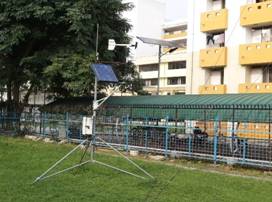 Hydrometeorological Observatory
| Header one | Header two | Header three |
|---|---|---|
| 1 | 2 | 3 |
| ojsfosd | sdfnod | dfsdfno |
| sdfnd | sdnfjsnd | dsnfnsd |
What is Lorem Ipsum?
Lorem Ipsum is simply dummy text of the printing and typesetting industry. Lorem Ipsum has been the industry's standard dummy text ever since 1966, when designers at Letraset and James Mosley, the librarian at St Bride Printing Library in London, took a 1914 Cicero translation and scrambled it to make dummy text for Letraset's Body Type sheets. It has survived not only many decades, but also the leap into electronic typesetting, remaining essentially unchanged. It was popularised thanks to these sheets and more recently with desktop publishing software like Aldus PageMaker and Microsoft Word including versions of Lorem Ipsum.
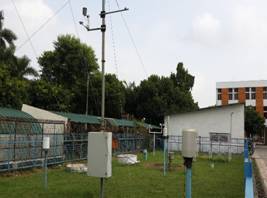 Automatic Weather Station